
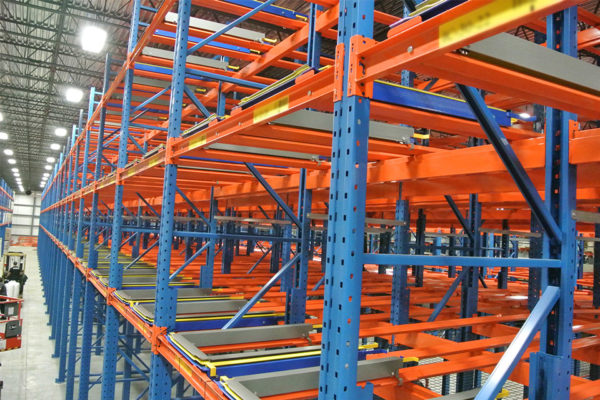
In the ever-evolving realm of logistics and supply chain management, warehouse efficiency has become a pivotal factor in maintaining competitive advantage. One of the most effective strategies to enhance warehouse operations is the implementation of pushback racking systems. These systems offer a dynamic approach to storage, allowing for increased capacity, improved accessibility, and streamlined inventory management. As the demand for efficient storage solutions grows, understanding the mechanics and benefits of pushback racking systems becomes essential for warehouse managers and operators.
Understanding Pushback Racking Systems
Pushback racking systems function by utilizing a series of nested carts on inclined rails, where pallets are loaded from the front and pushed back by subsequent loads. This system operates on a Last-In-First-Out (LIFO) principle, making it ideal for high-density storage environments where selectivity is less of a concern.
- Efficient use of space: These systems maximize storage density by minimizing aisle space.
- Ease of access: Pallets are easily accessible from the front, reducing retrieval time.
- Versatility: Suitable for a wide range of pallet sizes and weights.
Read more about this topic to understand how these systems can be tailored to specific warehouse needs.
Benefits of Pushback Racking Systems
Increased Storage Capacity
Pushback racking systems can significantly increase storage capacity, allowing warehouses to store more products within the same footprint. This is especially beneficial in urban areas where space is at a premium.
Improved Operational Efficiency
By reducing the time needed to store and retrieve pallets, pushback systems contribute to faster turnaround times and increased throughput. Explore further insights here on how this can enhance overall productivity.
Cost-Effectiveness
Although the initial investment may be higher than other racking systems, the long-term savings in operational costs and enhanced storage efficiency make pushback racking a cost-effective choice. Learn more in this detailed guide about the financial benefits.
Considerations for Implementing Pushback Racking
While pushback racking systems offer numerous advantages, certain factors should be considered before implementation:
- Inventory Type: Suitable for non-perishable goods due to the LIFO retrieval method.
- Weight Capacity: Ensure racks are designed to handle the weight of the stored pallets.
- Space Configuration: Assess the warehouse layout to optimize the integration of pushback racking systems.
Find additional information here on how to customize pushback racking solutions to meet specific business needs.
Conclusion
Pushback racking systems present a versatile and efficient solution for maximizing warehouse storage and improving operational workflow. By understanding the benefits and key considerations, businesses can implement these systems to enhance their warehousing capabilities. As the logistics landscape continues to evolve, embracing innovative storage solutions like pushback racking will be crucial for maintaining efficiency and competitiveness in the market.
